100 Christmas Coloring Pages for Kids: A Strategic Resource for Creators and Publishers
If you are building a children's activity book business, managing a content pipeline for seasonal products, or exploring new ways to engage young audiences, 100 Christmas Coloring Pages for Kids offers more than just a festive activity set. It is a structured, ready-to-use asset that can support product development, brand positioning, and operational efficiency. When used thoughtfully, a collection like this helps you move from idea to finished product faster, without sacrificing quality or originality. The key lies not in the pages themselves, but in how you integrate them into your workflow and long-term goals.
What This Resource Actually Provides
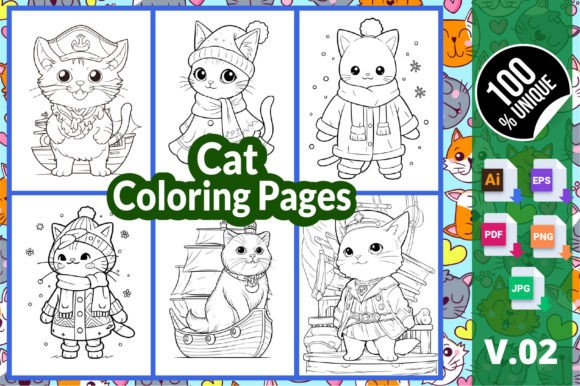
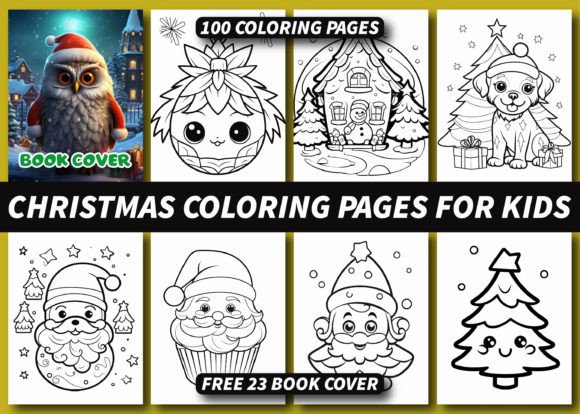
The package includes 100 black-and-white coloring pages, each delivered in both JPG and PNG formats at 300 DPI. The file dimensions are standard 8.5″ x 11″ inches, making them directly compatible with print-on-demand platforms and KDP interiors. Additionally, you receive 23 cover design files in PNG format at 300 DPI, giving you flexibility to create a cohesive book cover without starting from scratch. All images are high-resolution, which means they hold up well in print and can be resized as needed without losing clarity. This is not a collection of generic clip art—it is a curated set of Christmas-themed illustrations designed for children's coloring activities.
For creators who need reliable, scalable assets, this eliminates several production bottlenecks. You avoid the time cost of commissioning original illustrations, the technical hassle of format conversion, and the uncertainty of inconsistent quality across pages. What you get is a uniform, print-ready library that you can adapt, combine, or modify to suit your specific project.
Strategic Uses Beyond a Simple Coloring Book
Most immediately, 100 Christmas Coloring Pages for Kids can serve as the core content for a standalone coloring book on Amazon KDP. But that is just one application. Consider how this resource might support broader objectives:
- Product line expansion: If you already sell activity books or educational materials, adding a Christmas-themed volume during the holiday season can extend your catalog with minimal additional production time. The consistent format and high resolution mean you can maintain the same print quality across your entire line.
- Brand differentiation: The collection includes varied scenes—Christmas trees, holiday characters, festive settings—that allow you to curate a subset of pages for a unique theme. For example, you might select 30 pages focused on nature-themed Christmas scenes for a "Country Christmas" book, or choose pages with simpler lines for younger children. This curation process adds a layer of intentionality that sets your product apart from bulk offerings.
- Content repurposing: Because the files are available in both JPG and PNG formats, you can use individual pages as social media previews, email attachments for subscribers, or sample pages on your sales page. A single collection becomes a marketing asset as well as a product asset.
- Educational and activity bundles: Combine coloring pages with other activity types—mazes, puzzles, writing prompts—to create a comprehensive holiday activity book. The uniform page size makes integration straightforward, and the black-and-white design ensures compatibility with various binding and printing methods.
These uses share a common thread: they all rely on the resource as a foundation, not as an end in itself. The strategic value comes from how you position, customize, and combine the pages to meet a specific audience need.
Planning Your Approach: Intentionality Over Random Assembly
One of the most common pitfalls with pre-made content is treating it as a shortcut without a clear plan. It is easy to download the files, upload them to a KDP template, and publish within hours. But that approach rarely leads to sustained results. To use 100 Christmas Coloring Pages for Kids intentionally, start with a few planning steps:
- Define your target audience sub-group. Are you aiming at parents of preschoolers, teachers looking for classroom activities, or grandparents seeking a holiday gift? The same pages can serve different audiences if you adjust the book's title, description, and cover design accordingly. Knowing exactly who you are creating for shapes every subsequent decision.
- Decide on a curation strategy. You do not need to use all 100 pages in one book. In fact, creating multiple smaller books from the same collection—such as a 30-page book for toddlers and a 60-page book for older children—allows you to test different price points and customer preferences without creating new content from scratch.
- Plan your cover in advance. The included cover files give you a head start, but you should still customize them to match the tone of your interior. A cover that looks generic can undermine the perceived value of well-executed interior pages. Use the PNG files to experiment with color schemes, typography, and layout that reflect your brand.
- Consider the customer experience. Think about how the pages will feel in hand. The 8.5″ x 11″ size is standard, but if you are creating a smaller trim size, test how the images scale. The 300 DPI resolution gives you room to reduce size without pixelation, but enlarging beyond the original dimensions may introduce softness. Work within the file's native strengths.
This planning phase takes a few hours but can significantly improve the quality of your final product and the efficiency of your production process.
When to Use This Resource and What to Consider First
Timing matters. The Christmas market typically sees increased demand from late September through early December. If you are preparing a book for the current holiday season, you need to account for production lead times, including formatting, proofing, and listing approval on platforms like KDP. Having a ready-to-use collection like this allows you to compress your timeline—but only if you start early enough to test and refine.
Beyond timing, consider the competitive landscape. The KDP marketplace contains thousands of Christmas coloring books. Standing out requires more than good illustrations; it requires a clear value proposition. Ask yourself: What makes your book different? Is it the range of scenes? The simplicity of the designs for young children? The inclusion of bonus activities? The answer to that question should guide how you present the collection in your product description and cover design.
Another consideration is file management. The 100 JPG and 100 PNG images represent 200 individual files plus cover assets. Organize them systematically from the start—by page number, theme, or intended book—so you can locate and update specific pages without confusion. This is especially important if you plan to create multiple books from the same set.
Possible Risks of Using Pre-Made Content Without Clarity
The most significant risk is publishing a book that feels impersonal or indistinguishable from competitors. If you simply upload all 100 pages without any curation, cover customization, or audience targeting, you are competing solely on price and keyword ranking. That is a difficult game to win, especially for new publishers.
Another risk involves underestimating the importance of proofing. Even though the files are high-resolution and ready to use, you should still check each page for alignment, bleed margins, and print compatibility. A single misaligned page can lead to returns or negative reviews. Treat the resource as a draft that needs final review, not as a finished product.
There is also the risk of over-reliance on one collection. If you build your entire holiday catalog around this single set of pages, you limit your ability to differentiate across multiple products. Instead, use this collection as one component in a broader content strategy that includes other activity types, themes, and age ranges.
Practical Examples of Thoughtful Implementation
Consider a creator who wants to launch a series of three Christmas activity books: one for toddlers (ages 2–4), one for preschoolers (ages 4–6), and one for early elementary (ages 6–8). Using the same 100 Christmas Coloring Pages for Kids collection, they can:
- Select 30 pages with large, simple outlines for the toddler book.
- Choose 40 pages with slightly more detail for the preschool book.
- Use the remaining 30 pages, plus a few of the more intricate scenes, for the elementary book.
- Design each cover using the PNG files, but with distinct color schemes and fonts that signal the appropriate age group.
- Add a single page of simple instructions or activity prompts to each book to enhance educational value.
This approach creates three distinct products from one resource, each with a clear audience and purpose. It also reduces the time and cost of producing original art for each book.
Another example: a teacher or homeschool parent might use the PDF version (if generated from the JPGs) as a seasonal classroom resource. They can print individual pages as needed, create a holiday booklet, or use the images as prompts for storytelling or vocabulary lessons. The black-and-white format keeps printing costs low, and the high resolution ensures clear reproduction even on standard printers.
Long-Term Value and Positioning
The value of a resource like 100 Christmas Coloring Pages for Kids extends beyond a single publishing cycle. If you maintain the files in an organized library, you can reuse them in future years—either in updated editions, as part of a bundle, or as bonus content for email subscribers. The evergreen nature of Christmas themes means the content does not become outdated. What changes is your ability to market and position it based on evolving customer preferences.
For publishers building a brand, consistency matters. Using the same illustration style across multiple holiday books creates a recognizable look that customers come to trust. If you start with this collection and later add other themed volumes—Easter, Halloween, birthday—you can establish a cohesive visual identity that strengthens your brand over time.
From an operational standpoint, having a reliable, high-resolution asset library reduces dependency on freelancers or agencies for every new project. You can allocate your creative budget to areas that require customization—cover design, marketing copy, interior layout—while using pre-made assets for the core content. This balance between efficiency and originality is where many successful self-publishers find their stride.
Making the Decision That Fits Your Goals
Ultimately, the decision to use 100 Christmas Coloring Pages for Kids should align with your specific objectives. If you need to quickly test a Christmas product with minimal risk, the collection offers a low-barrier entry point. If you are looking to expand an existing line with a seasonal offering, it provides a consistent quality baseline. If you are new to KDP or self-publishing, it removes many of the technical hurdles that slow down first-time projects.
The key is to approach the resource as a tool, not a solution. A tool works well when you understand its strengths, its limitations, and the conditions under which it delivers the best results. Spend time planning how you will use these pages, who you will serve, and how you will present the final product. That upfront effort is what transforms a collection of images into a thoughtful, effective book that resonates with its intended audience.
By treating the resource with the same care you would apply to original content, you give yourself the best chance of creating a product that stands out, performs well, and contributes to your long-term goals. The pages are ready. The strategic work is yours to do.