The 100 Envelope Savings Challenge and the 100 Weeks Savings Approach: A Balanced Evaluation
If you have been exploring ways to build a consistent savings habit, you have likely encountered the 100 Envelope Savings challenge. This straightforward system has gained popularity for its simplicity and its clear end goal: saving over $5,000 by methodically setting aside amounts from $1 to $100. The 100 Weeks Savings variation extends the same principle over a longer period, offering flexibility for those who prefer a slower, more gradual approach. This article provides an objective evaluation of both methods, helping you decide whether either aligns with your financial goals, habits, and lifestyle.
What Are the 100 Envelope Savings and 100 Weeks Savings Systems?
The 100 Envelope Savings challenge is a structured saving method where you label 100 envelopes with numbers 1 through 100. Each day, you randomly select an envelope and deposit the corresponding dollar amount into a savings fund. Over 100 days, you accumulate $5,050. The 100 Weeks Savings adaptation follows the same principle but spans 100 weeks instead of 100 days, reducing the weekly commitment to between $1 and $100 and making the total of $5,050 feel more attainable for those with tighter cash flow. Both approaches rely on a simple progression: save small amounts first and larger amounts later, though randomness in selection can distribute the difficulty.
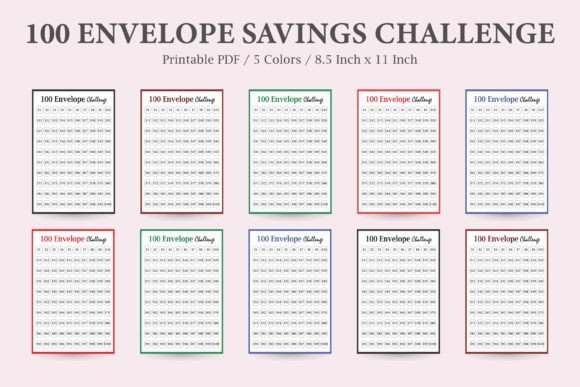
A 100 Envelope Savings Savings Tracker printable helps you record which envelopes you have completed, track your total savings, and maintain motivation. Many digital downloads include multiple color options, minimalist designs, and a 100 Envelope Budget Finance Goal Tracker that works equally well whether you use physical envelopes, a jar, or a dedicated bank account. The Envelope Savings System is adaptable: you can save daily, weekly, or monthly, and you can randomize your envelope selections to keep the challenge interesting.
Clear and Tangible Progress
One of the strongest arguments for the 100 Envelope Savings method is the visible sense of progress. Each sealed envelope represents a concrete step toward your goal. Whether you use a physical 100 Envelope Box and Savings Tracker or a digital tracker, the act of recording each deposit reinforces the habit. This feedback loop can be especially motivating for people who respond well to visual cues and incremental achievements.
Flexible Time Frames
The 100 Weeks Savings variation offers a lower weekly savings burden, making it suitable for those with irregular income or tight budgets. Saving $50.50 per week on average is far less daunting than saving $50.50 per day. If your financial situation fluctuates, you can adapt the time frame to suit your cash flow without altering the underlying structure.
Low Barrier to Entry
A 100 Envelope Challenge printable is typically available as an inexpensive digital download, often with ink-friendly designs that you can print at home. The physical setup requires only envelopes or a container, meaning the upfront cost is minimal. This makes the system accessible to nearly anyone regardless of income level.
Psychological Rewards of Gamification
For many, the random selection of envelopes introduces an element of play. The unpredictability of whether you will draw a low number like $3 or a high number like $97 keeps the process engaging. This gamification can help sustain motivation over the duration of the challenge, especially when combined with a savings tracker that shows your cumulative total rising toward $5,050.
Cash Management and Security
A core assumption of the 100 Envelope Savings system is that you have access to cash for each deposit. Keeping large amounts of cash at home, especially as your savings accumulate, introduces security and insurance risks. If you lose the cash or it is stolen, there is no FDIC protection. Alternatives include using a savings account and transferring the corresponding amount electronically, or using the envelope system as a psychological tool while keeping funds in a bank. If you choose the bank route, you lose the tactile satisfaction of handling envelopes but gain security and interest earnings.
Cash Flow Variability
Not everyone has $5,050 in disposable income over a 100-day or 100-week period. If you draw a high-number envelope during a month with unexpected expenses, you may feel pressured to skip or delay a deposit. This can disrupt the challenge and lead to discouragement. The 100 Weeks Savings approach mitigates this by spreading the total over nearly two years, but the same risk exists if your income is irregular. Before starting, assess your typical monthly surplus to ensure the challenge is realistic for your circumstances.
Discipline and Consistency
Like any savings method, the 100 Envelope Savings challenge requires consistent discipline. Without a regular habit, it is easy to fall behind or abandon the system entirely. A 100 Envelope Savings Savings Tracker helps, but it is only as effective as your commitment to using it. Some people thrive on this structure, while others may find it too rigid or tedious after the initial novelty fades.
Potential for Over-Optimization
Some users attempt to game the system by selecting only low-number envelopes early on, leaving high-number envelopes for later. While this can smooth out cash flow demands, it also reduces the random element that makes the challenge engaging. If you prefer predictability, you might order the envelopes from lowest to highest and save in sequence, though this changes the nature of the challenge.
Who Is a Strong Fit for the 100 Envelope Savings System?
This approach works well for people who enjoy structured, step-by-step goals and respond positively to visual progress tracking. If you are motivated by crossing items off a list or filling a container, the 100 Envelope Box and Savings Tracker can be a powerful tool. It is also a good fit for those who have a steady income and can consistently allocate a small daily or weekly savings amount without disrupting essential expenses.
The system is particularly effective as a short-term savings boost. Completing the challenge in 100 days can build momentum and create a sense of accomplishment that spills over into other financial habits. For those with a specific savings target, such as a vacation, emergency fund starter, or holiday spending, the 100-day timeline offers a focused burst of saving.
The 100 Weeks Savings variation is a strong fit for individuals who prefer slower, more sustainable progress. If you have tried aggressive savings challenges in the past and burned out, stretching the same total over 100 weeks reduces pressure and allows you to build the habit gradually. This version also works well for people whose income includes periodic bonuses or irregular payments, as the weekly commitment is easier to adjust.
When Alternatives May Be Worth Considering
If you prefer automation and minimal hands-on tracking, the 100 Envelope Savings system may feel unnecessarily manual. Automatic transfers from your checking to a savings account each payday can achieve similar results with less effort. A simple percentage-based savings plan or a round-up app might better suit someone who values convenience over engagement.
For those who struggle with cash-based systems, an alternative like a sinking fund approach or a dedicated savings bucket within a high-yield account can provide structure without the physical cash management. Digital tools such as savings apps or budgeting spreadsheets can replicate the envelope concept without security risks.
If your goal is larger than $5,050 or you need to save irregular amounts, the 100 Envelope challenge may be too rigid. Scaling the system to 200 envelopes or varying the increments can work, but it adds complexity. In that case, a more flexible savings framework, such as a zero-based budget with a savings line item, might serve you better.
Additionally, if you are deeply in debt or lack an emergency fund, focusing on debt repayment or building a small cash buffer before attempting a savings challenge may be more prudent. Saving $5,050 is admirable, but it should not come at the expense of high-interest debt reduction or essential living expenses.
Practical Decision-Making Insights
Before committing to the 100 Envelope Savings or 100 Weeks Savings approach, take a realistic look at your monthly cash flow. Calculate how much you can confidently set aside without straining your budget. If the daily or weekly commitment feels tight, consider adjusting the time frame or using the 100 Weeks variation to reduce pressure.
Decide whether you will use physical envelopes or a digital tracking system. A 100 Envelope Challenge printable can serve as a visual motivator even if you keep your savings in a bank. The key is to maintain the habit of recording each deposit, regardless of the container you choose.
Consider pairing the challenge with an accountability tool like a budgeting app or a savings group. Sharing your progress can reinforce your commitment and provide encouragement when motivation wanes. The 100 Envelope Budget Finance Goal Tracker can be integrated into a larger financial plan, but it works best when you view it as one component of a comprehensive approach to saving, not a standalone solution.
Finally, remember that the goal of any savings system is to build a habit that outlasts the challenge itself. The 100 Envelope Savings method can be a powerful catalyst for developing greater financial awareness and discipline. Whether you complete it in 100 days or 100 weeks, the real value lies in the routine you establish along the way. Evaluate the system honestly, adapt it to your needs, and use it as a stepping stone toward lasting financial health.